
The Importance of a Five Degree Pitch
With any flat roofing project, one of the main objectives is to prevent water pooling. After all, a flat roof is never truly flat. It must be designed to include a fall to allow water to be effectively removed from the roof.
This principle should also apply to any flat glass rooflights which should be installed on a pitch to prevent water and dirt from pooling on the glass.
Creating the correct angle for your rooflight installation will make all the difference in the long run, ensuring the glass stays cleaner, prevent the buildup of dirt and moss, and ultimately extending the life span of the product.
Let gravity work for you
Everything boils down to simple physics. If you picture spilling a glass of water onto a table, you will notice that the liquid stays in situ until it is mopped up—this same principle applies to rainwater that lands on a rooflight. To make matters worse, rainwater contains particulates of pollen, dust, and pollution, which once the rain evaporates are left to dry on the glass.
The simple answer is to raise one side of the rooflight higher than the other. Your upstand provides the perfect opportunity to do this; by creating an angle within the upstand, you ensure water will run off of the glass and onto your roof.
Easy Clean Glass
A common issue we encounter is clients installing the rooflight at an incorrect pitch by not adding enough rise along the upstand. One possible solution is applying Ritec easy clean to the glass. At a basic level, this treatment bonds to the top layer of the glass, making it more slick so water beads and runs off more easily, similar to a newly waxed car. While this may not solve the problem if the pitch is too shallow, it has helped in many situations and is much less cost- and labor-intensive than amending the upstand.
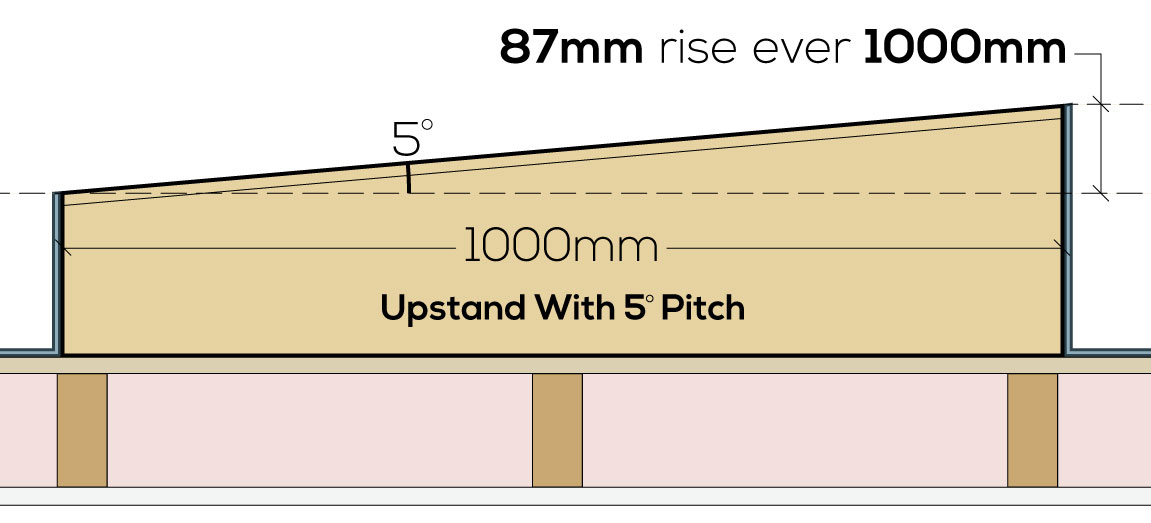
Determining the correct pitch is crucial for efficient water run-off on your flat glass rooflight. A five degree pitch is equivalent to 9mm every 100mm or 87mm per meter.
However, it’s essential to consult with your chosen rooflight supplier. Factors such as glass thickness and rooflight span must be considered, especially for larger rooflights, which may require an increased pitch, potentially up to 15 degrees.
Roof light upstand pitch calculator
If you need to determine a specific roof upstand slope, use our roof pitch calculator to quickly find the vertical distance or rise of the pitch. For example, if your upstand length is 1500mm and you want a 6-degree pitch, simply enter these values and click calculate to find out the required rise. Please note that the calculator rounds up, so for more precise calculations, consult your architect.
Roof pitch calculator
The minimum roof slope recommended by BS 6229 and BS 8217 is 1:80 for the completed roof and 1:40 for the roof structure to accommodate any discrepancies in materials and construction. It’s also wise to consult the roofing material supplier’s recommendations, as they may differ from the minimum requirements. Choose either 1:40 or 1:80 along with the roof span to determine the drop height in our roof pitch calculator.
Roof Pitch Calculator
Roof upstands pitch examples
Here are some of the more commonly ask for pitches at a glance:
600mm length at 5 degree pitch = 53mm rise
800mm length at 5 degree pitch = 70mm rise
1000mm length at 5 degree pitch = 87mm rise
1500mm length at 5 degree pitch = 131mm rise
2000mm length at 5 degree pitch = 175mm rise
2000mm length at 10 degree pitch = 349mm rise
2000mm length at 15 degree pitch = 524mm rise
Minimum roof pitch 1:40
Here are some of the more commonly ask for pitches at a glance:
1m length for 1:40 = 25mm rise
2m length for 1:40 = 50mm rise
3m length for 1:40 = 75mm rise
If you’re constructing your own upstand, ensure you place the pitch at the top, where the upstand meets the rooflight. This positioning is crucial for optimal aesthetics. Some rooflight offer flat upstands, prompting you to add the pitch at the bottom, thereby altering the upstand’s angle. For a seamless and efficient rooflight solution, prioritize proper pitch placement at the top.
Exceptions when a pitch isn’t needed
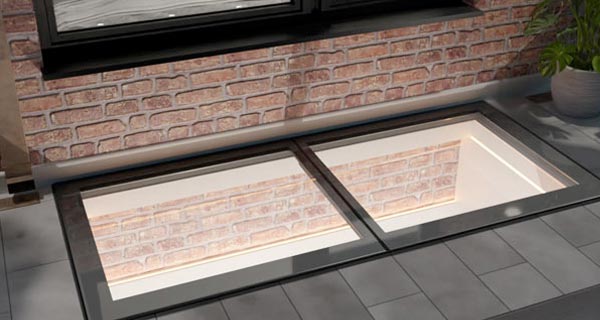
Not every rooflight requires a pitch. For walk-on rooflights, installation onto a flat kerb is acceptable, but regular cleaning is essential. You may also want to consider an anti-slip finish on the glass, as they can become slippery when wet.
At EOS Rooflights, we offer upstands with flat and pitched tops to suit a wide variety of installations.
Contact our team
If you have any questions, would like a bespoke price or want to enquire about our installation service. Give us a call or drop an email:
 0208 462 3557

Our other products
Rooflights
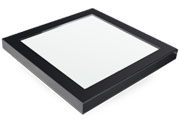
We offer a wide range of rooflights designed for flat and low pitched roofs.
LaNterns
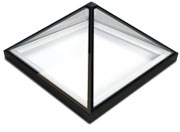
Our slim line lanterns are a modern twist on the traditional.
Skylights
Frameless design coupled with exceptional thermal performance.